Jeffrey Czum: The Art of Interruption
Jeffrey Czum’s work lives in the space between what we recognize and what we’re not entirely comfortable admitting we see. At first glance, his photographs feel familiar, almost effortless in their clarity. But the longer you sit with them, the more that ease begins to fracture.
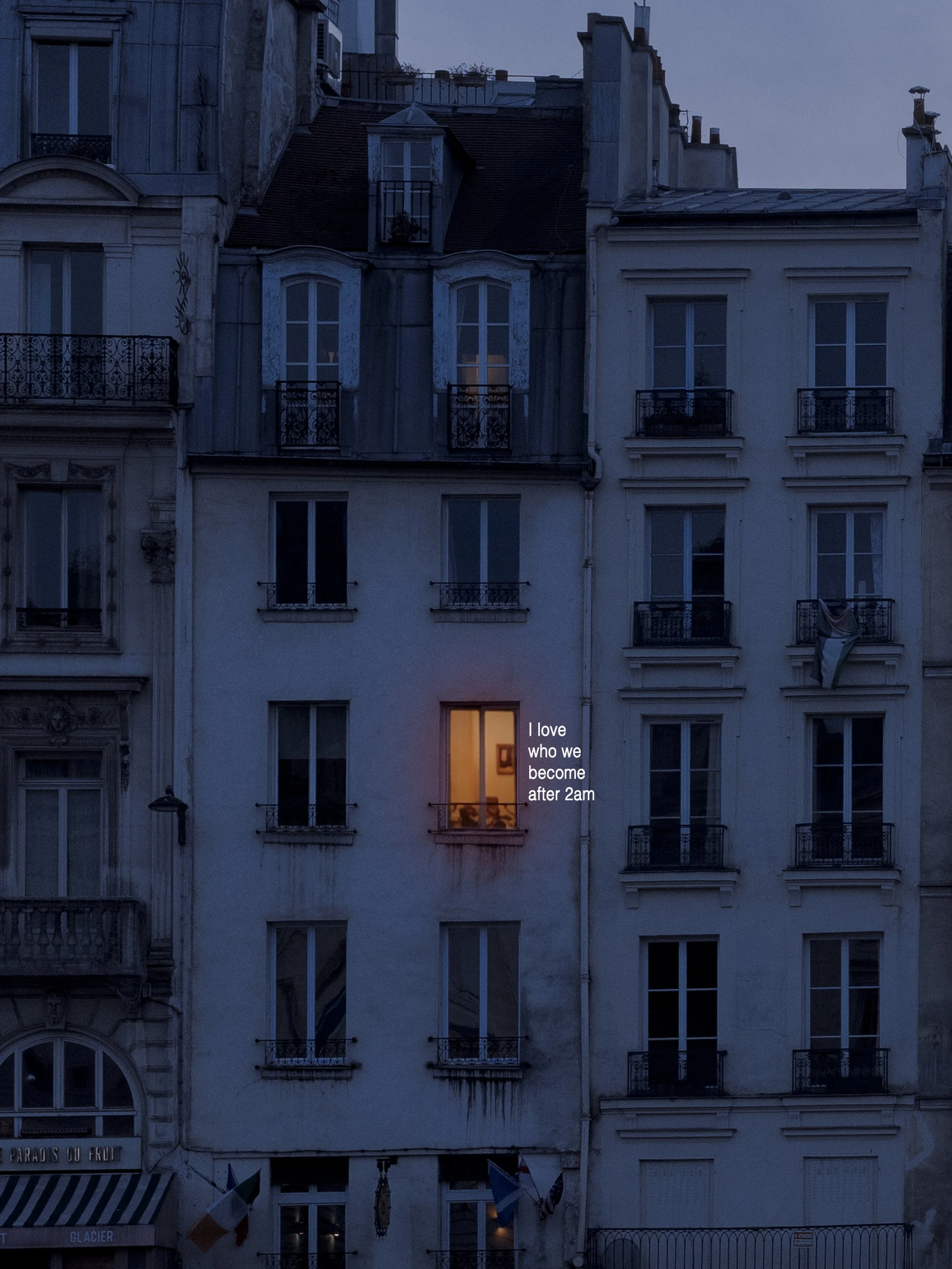
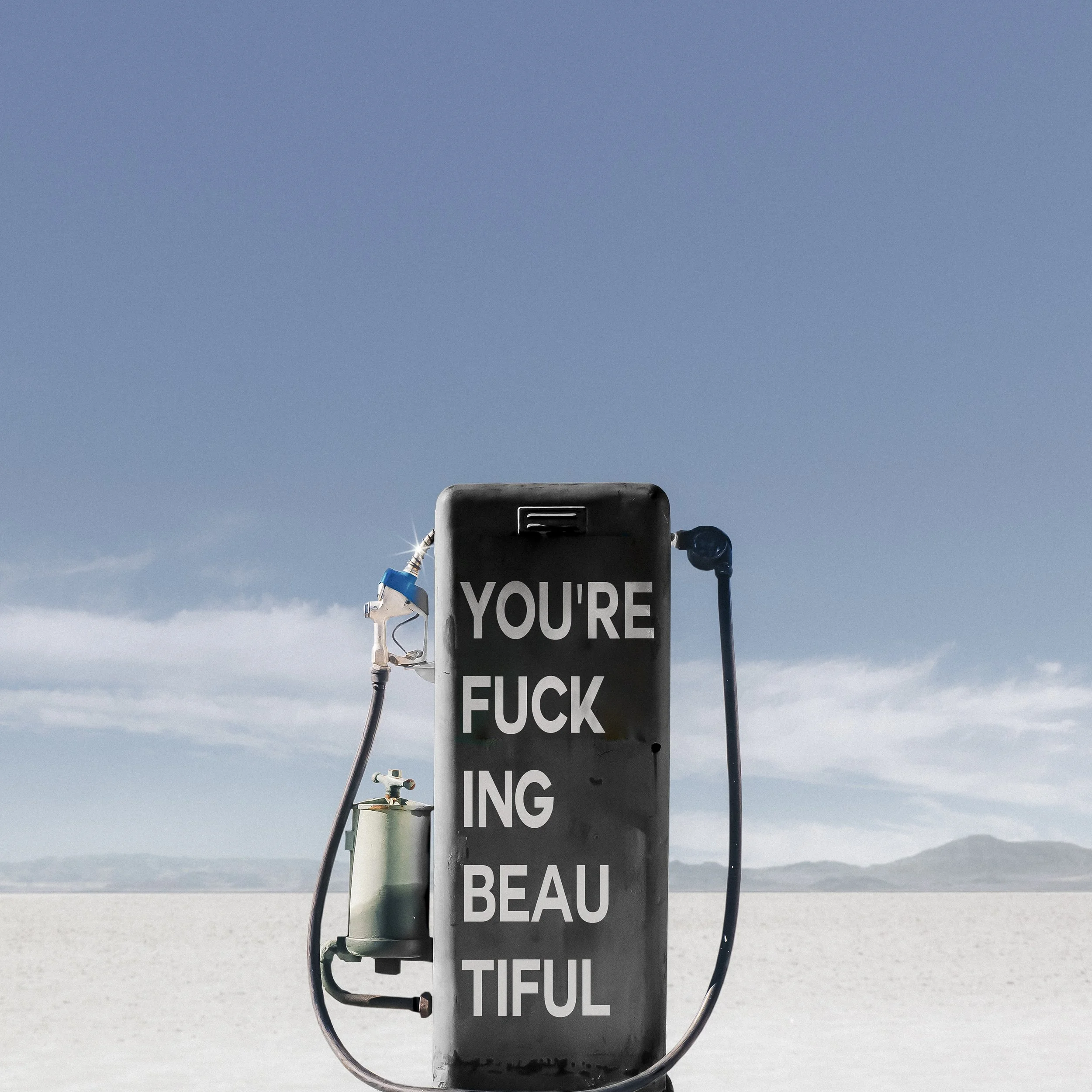
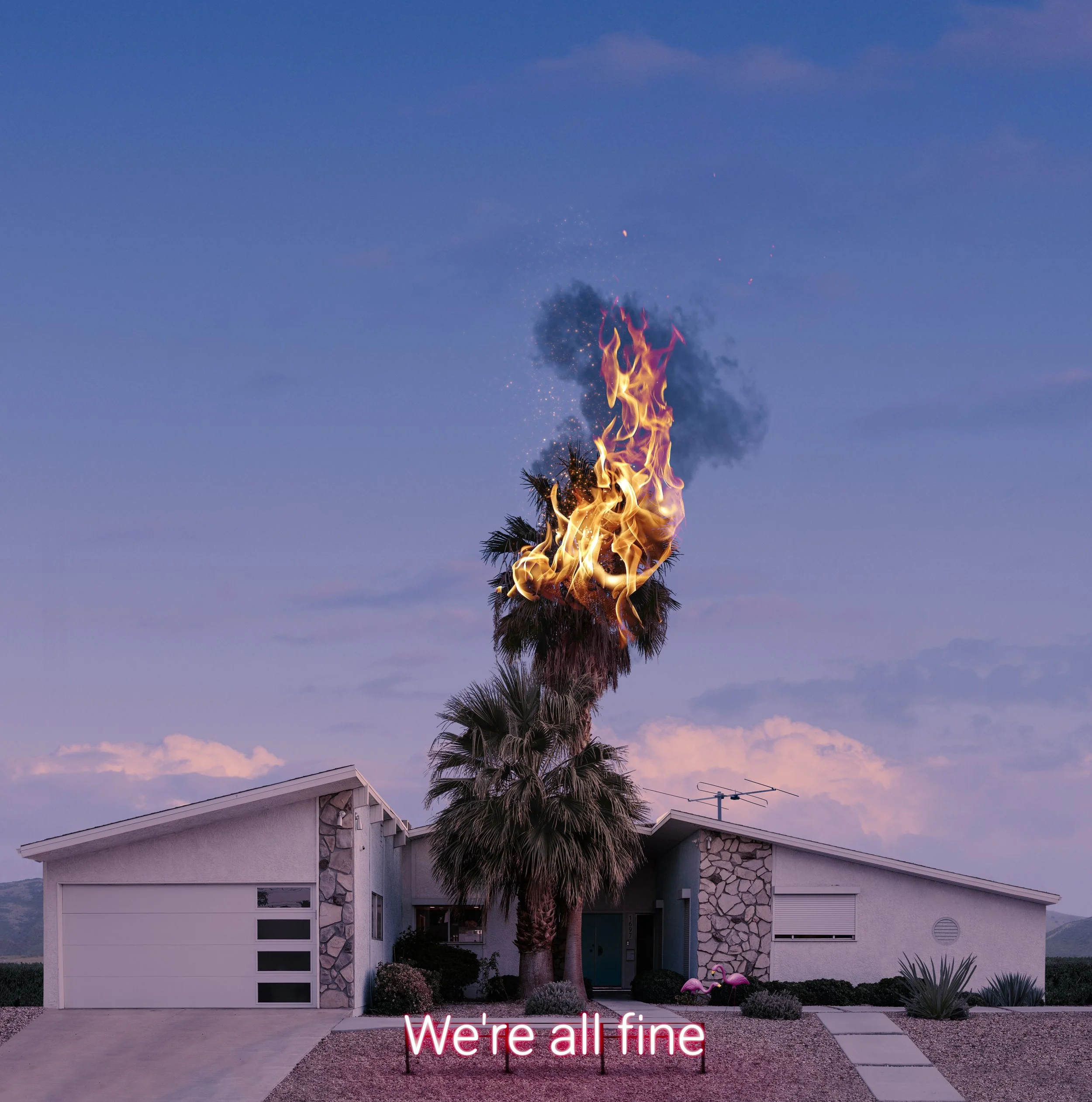
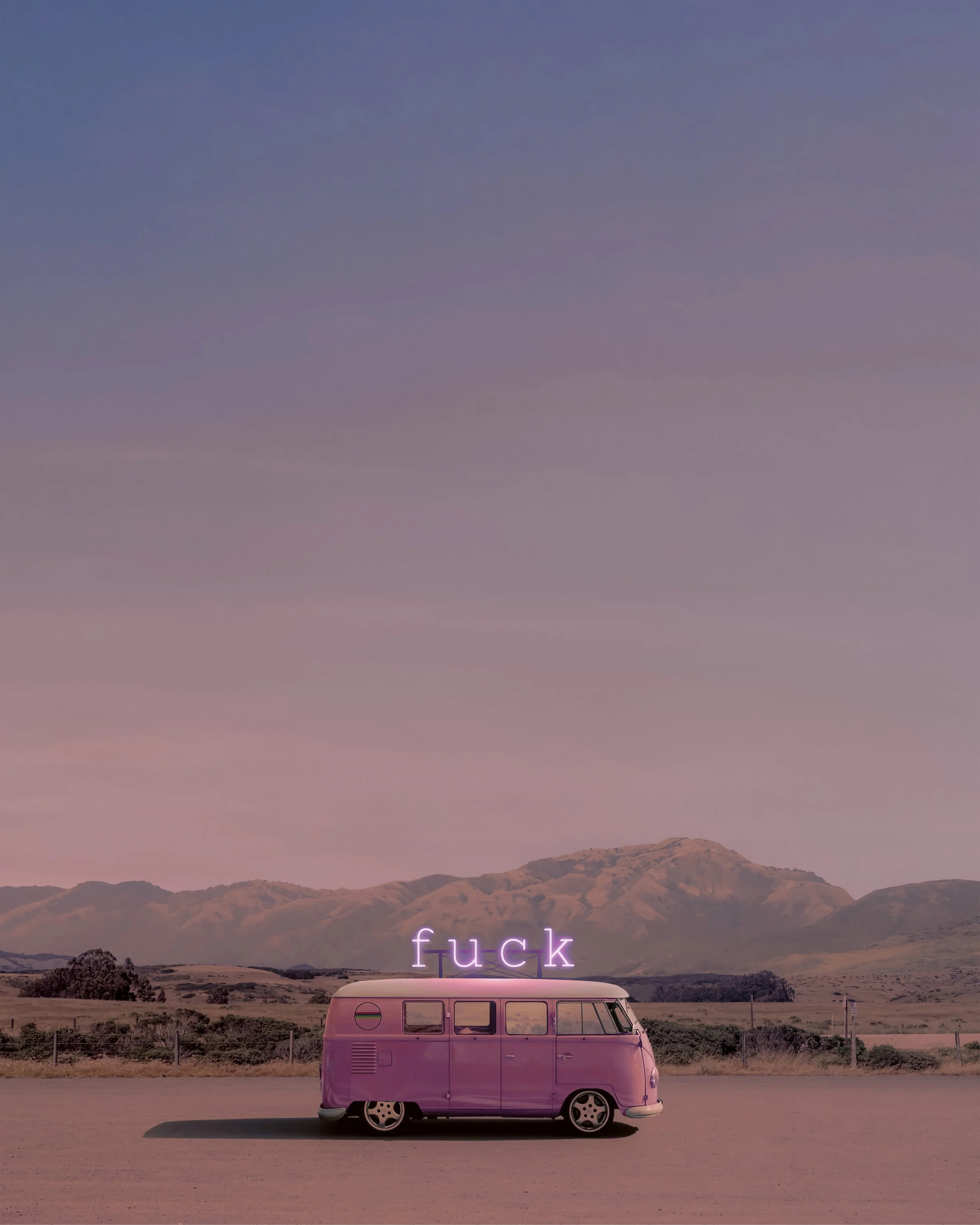
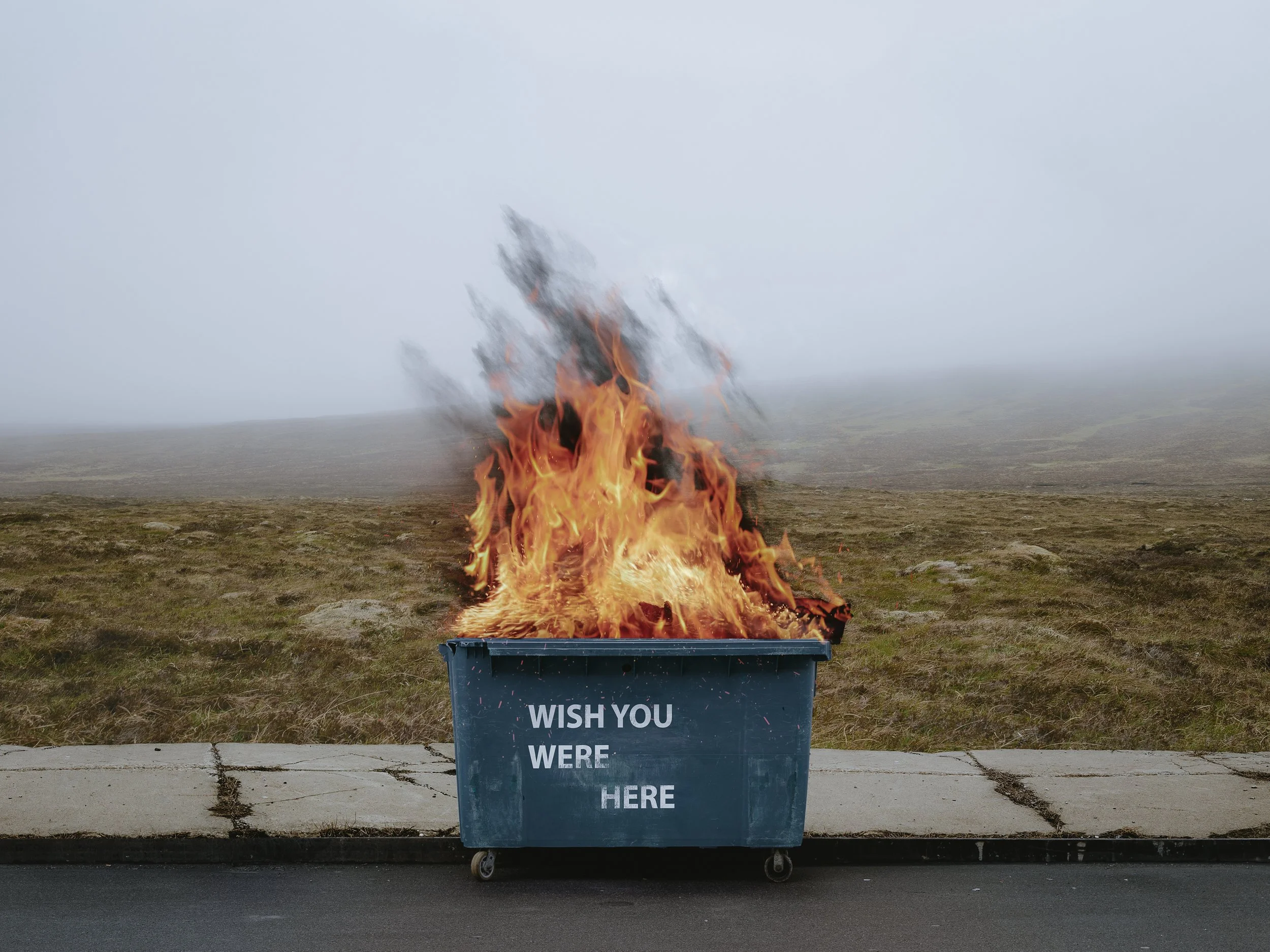
What defines Czum’s practice is not just his subject matter, but his instinct to intervene. He doesn’t document the world as it is, nor does he fully construct something entirely new. Instead, he inserts himself into the existing landscape, shifting it just enough to expose what’s already there. Language becomes his primary tool, not as explanation, but as disruption.
His phrases don’t guide the viewer. They destabilize. They introduce emotion where there was neutrality, tension where there was calm, humor that quickly slips into something more complicated. The result is a kind of visual dissonance, where image and text refuse to settle into a single reading.
There is a particular intelligence in how controlled everything feels. The compositions are deliberate, almost restrained, grounded in a visual story that is clean and highly considered. And yet within that control, something begins to unravel. Czum understands that it only takes a single shift, a few words, a slight exaggeration, to transform the emotional temperature of a scene entirely.
What makes the work resonate is its ability to mirror something internal. The environments may be external, but the experience of them is deeply psychological. His images operate less as places and more as states of mind. They capture that strange overlap between sincerity and irony, confidence and doubt, intimacy and distance.
In this way, Czum is less interested in telling a story than in interrupting one. He takes the narratives we instinctively assign to places, to objects, to moments, and quietly reroutes them. The viewer is left to reconcile the gap between what they expected to see and what they are actually confronted with.
This tension is where the work holds. It doesn’t resolve, and it doesn’t need to. Instead, it lingers, creating a subtle but persistent sense that something just beneath the surface has been revealed, if only for a moment.