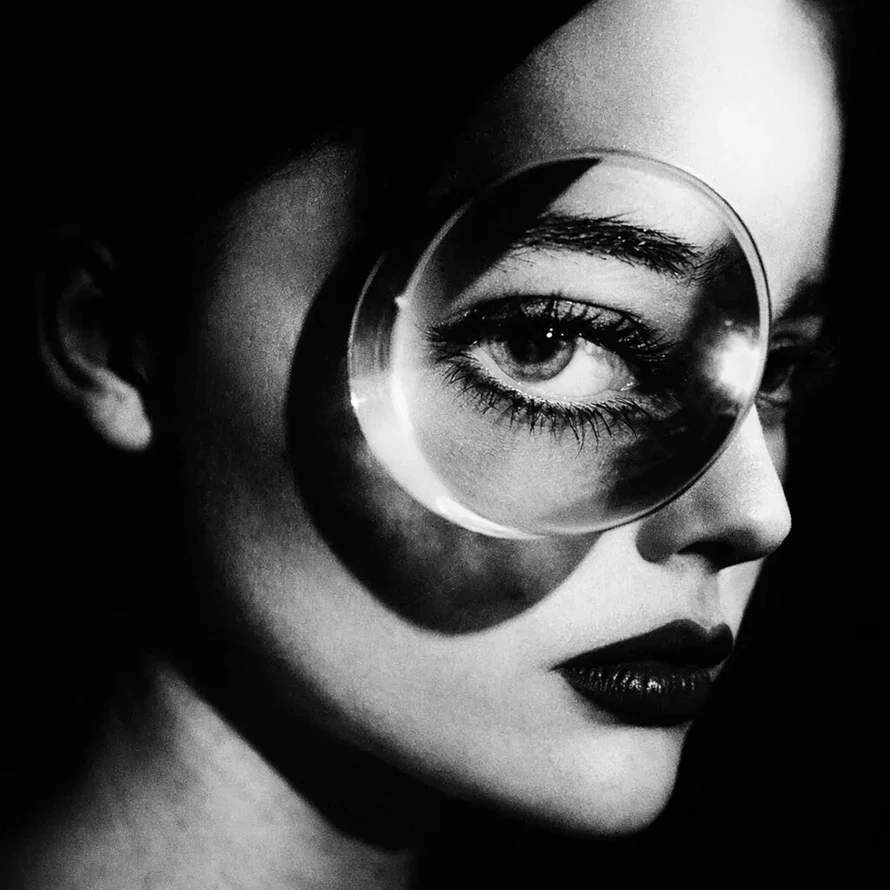
The Art of Portrait Photography
We live in a moment where images are constant. Faces are everywhere, captured quickly, shared instantly, and just as quickly forgotten. Portraiture, in its truest sense, asks something entirely different. It asks for pause, for intention, and for a level of authorship that separates a photograph from an image.
The distinction matters.
A portrait is not simply a likeness. It is a construction, whether subtle or overt, shaped by the photographer’s eye as much as the subject’s presence. The most enduring examples feel immediate, yet they are anything but accidental. There is a quiet discipline behind them, a balance between control and spontaneity that resists the speed of contemporary image-making.
Photographers like Richard Avedon and Irving Penn understood this inherently. Avedon stripped the portrait down to its essentials, often isolating his subjects against stark white backdrops, allowing gesture and expression to carry the image. Penn, by contrast, introduced a kind of restraint, using space, angles, and minimal environments to create portraits that feel both composed and deeply human. In both cases, what remains is not just the subject, but a sense of psychological presence.
That ability to hold attention is increasingly rare.
In an era shaped by phones and immediacy, capturing a portrait that feels timeless requires a deliberate resistance to speed. It is not about perfection, nor is it about polish. It is about clarity of vision. The photographer must decide what to reveal, what to withhold, and how to shape the space between the two.
This is where contemporary portraiture becomes especially compelling.
Artists working today are not only documenting their subjects, but actively constructing identity through the image. Tyler Shields approaches portraiture with a cinematic sensibility, building entire worlds around his subjects where character and narrative take precedence. The result is a portrait that feels authored, almost mythic, rather than observational.
Nick Mele, on the other hand, leans into character and nostalgia, creating portraits that blur the line between reality and performance. His subjects often feel familiar, yet slightly heightened, as though drawn from memory rather than a single moment in time.
With Antoine Verglas, there is a distinct shift toward intimacy. His portraits carry a sense of ease and proximity, often capturing subjects in moments that feel unguarded, even within the context of fashion. There is a softness to his approach that allows personality to emerge without overt construction.
What connects these practices is not a single style, but a shared understanding that portraiture is an act of translation. The subject is only one part of the equation. The photograph becomes the space where interpretation happens.
At a time when images are endlessly produced and consumed, the portraits that endure are those that resist that cycle. They hold something longer. They invite a second look, then a third. They feel considered.
To create a timeless portrait today is not simply a matter of technical skill. It requires intention, patience, and a willingness to slow down in a culture that rarely does. That is where the art lies, not in capturing a face, but in shaping how it is seen, and how it continues to be remembered.