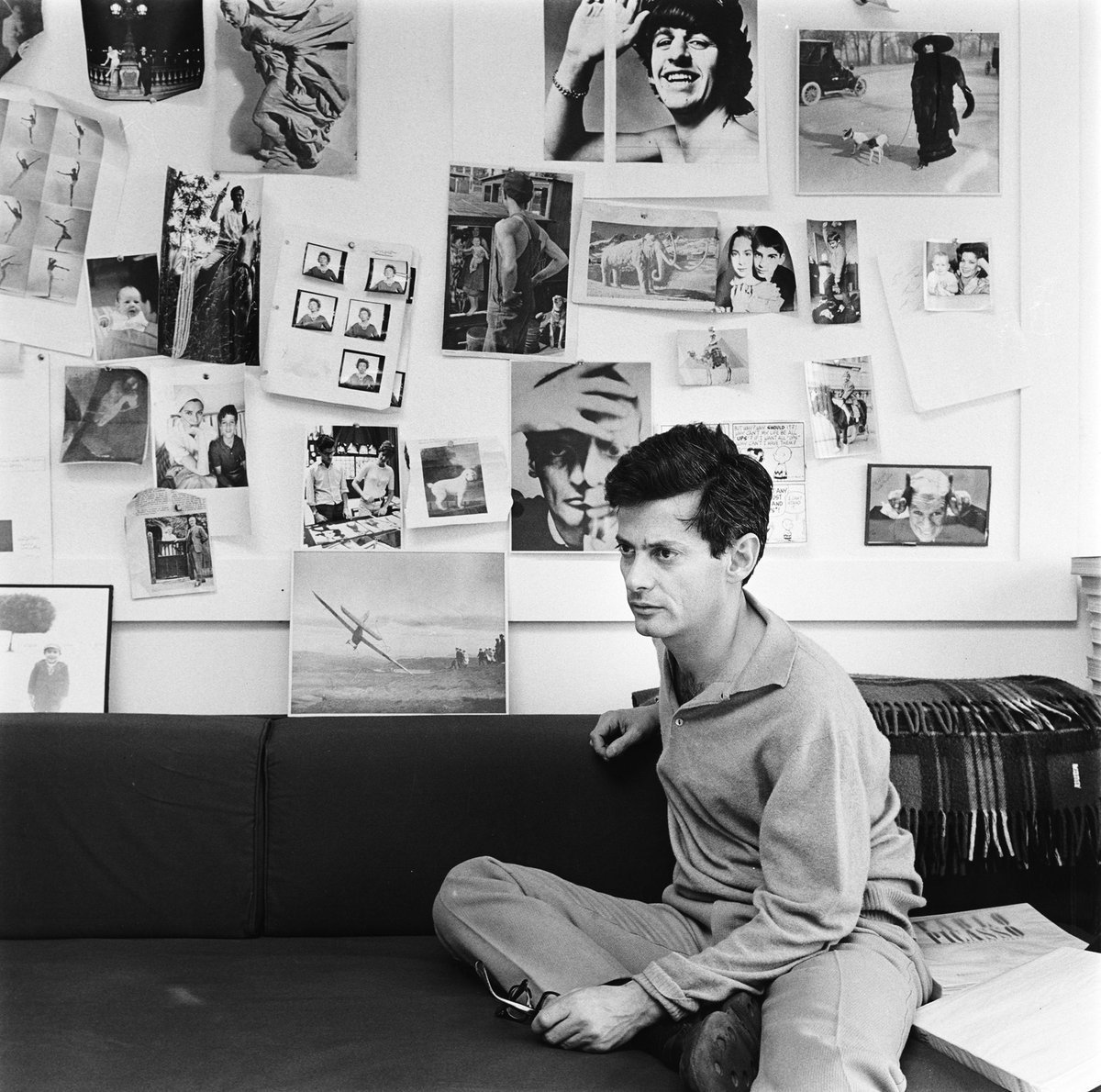
Richard Avedon: After the Shot
When people talk about Richard Avedon, the focus is usually on what appears in the frame: the stark white backgrounds, the direct gaze, the sense that the subject is exposed rather than presented. What tends to receive less attention is how deliberate and rigorous his editing process was, and how central it was to the meaning of the work. Avedon treated editing as an essential part of photography, not something that followed the act of taking pictures, but something that determined what those pictures ultimately were.
Avedon was known for shooting extensively during portrait sessions. Contact sheets from his archive show long sequences of near-identical frames, with small variations in posture, expression, or tension accumulating across a roll of film. This volume was intentional. He believed that meaning did not usually appear in a single, decisive instant, but emerged gradually as a session wore on. Editing allowed him to look across these variations and identify the image that felt most exact, not in a technical sense, but in terms of what it revealed.
He often emphasized that photographs were not objective records but interpretations. The edit was where that interpretation became clear. Images that were well lit, balanced, or conventionally successful could still be rejected if they felt evasive or inert. What he looked for instead were photographs that carried psychological weight, images that suggested strain, self-awareness, or vulnerability. This did not require dramatic gestures. Often it appeared in small details, a stiffened posture, a guarded look, a moment where the subject’s control seemed slightly compromised.
Avedon worked closely and repeatedly with contact sheets, marking and revisiting them over time. The process was comparative rather than instinctive. Instead of choosing a photograph in isolation, he judged it against the frames surrounding it, paying attention to what shifted from one exposure to the next. The selected image was usually the one that gained force through comparison, the frame that felt most charged when placed alongside the others. In this way, editing functioned as a method of sustained looking rather than quick decision making.
Cropping played a significant role in this process. Avedon frequently removed contextual elements that might soften or explain the subject. His preference for plain backgrounds and tight framing was not simply a stylistic choice, but part of his editorial logic. By stripping away setting and props, he limited the ways an image could be read. Attention was concentrated on the face, the body, and the implied psychological exchange between subject and camera. Editing narrowed interpretation rather than expanding it.
Editing also shaped how photographs functioned in sequence. In books and exhibitions, Avedon paid close attention to order, spacing, and repetition. Individual portraits were rarely meant to stand entirely on their own. When similar images were placed together, patterns became visible across faces and bodies, patterns related to age, power, fatigue, or performance. Meaning accumulated through proximity and rhythm, not through explicit explanation. This approach is evident in his long-term projects, where the editorial structure is as carefully considered as the images themselves.
Avedon was open about the ethical stakes of this process. He understood that choosing one image over another shaped how a person would be seen, sometimes for decades. He did not claim that editing could be neutral. Instead, he accepted that it involved responsibility and judgment. For him, refusing to choose or softening a decision for the sake of comfort was its own kind of distortion.
This attitude occasionally led to discomfort or criticism. Some subjects disliked their portraits, and some viewers found the images harsh. Avedon did not deny these reactions. He regarded them as a consequence of taking editing seriously, as a process that required commitment rather than accommodation.
What continues to make Avedon’s editing practice relevant is its emphasis on decisiveness. Working with film imposed limits, but his approach went beyond technical necessity. Editing was less about improving an image than about deciding what, exactly, the image was doing. The final photograph stood in place of all the others that were rejected, carrying the weight of those exclusions.
Seen this way, Avedon’s photographs are not simply records of encounters. They are the result of prolonged attention, comparison, and choice. Editing was the mechanism through which that attention was sharpened. His legacy lies not only in the images themselves, but in a way of thinking about editing as a form of authorship, one that treats selection as both an aesthetic and ethical act.