

The Return of Cinematic Photography
In an era dominated by endless scrolling and instant imagery, a growing number of photographers are returning to something slower, moodier, and far more narrative-driven: cinematic photography.
Rather than functioning as straightforward documentation, these images unfold like film stills. They hint at a larger story beyond the frame, inviting the viewer to linger in atmosphere, tension, glamour, or ambiguity. The appeal lies not only in what is shown, but in what is withheld.
While cinematic influences in photography are hardly new, the visual style has taken on renewed relevance in recent years. Viewers increasingly gravitate toward photographs that feel transportive rather than immediate: works that reference memory, old Hollywood, suspense, fashion editorials, and the emotional pacing of film itself.

Guy Bourdin
Long before the rise of social media aesthetics, photographers such as Helmut Newton, Guy Bourdin, and Cindy Sherman understood the power of suggestion within a single frame. Their works often felt suspended mid-scene, as though the viewer had walked into the middle of a narrative already unfolding. Fashion photography in particular became deeply intertwined with cinema throughout the late twentieth century, borrowing visual cues from noir films, thrillers, and Hollywood glamour to create images that felt theatrical rather than documentary.
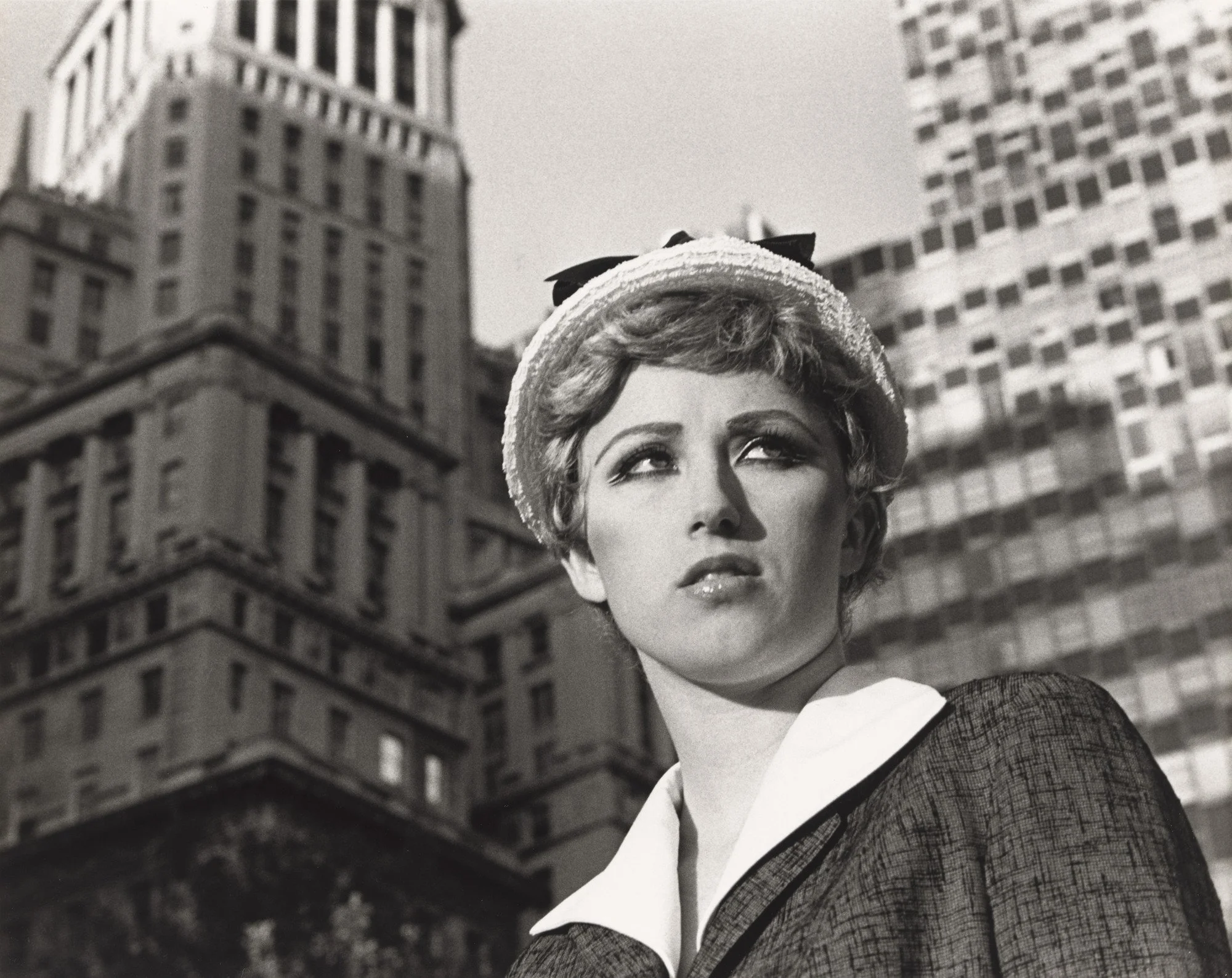
Cindy Sherman
Today, contemporary photographers are revisiting that same tension between photography and cinema in distinct ways. Among them is Tyler Shields, whose work frequently merges Hollywood spectacle with carefully staged compositions. In works such as Desert Legs, Shields deepens the relationship between photography and film not only aesthetically, but technically. The photograph was shot using a VistaVision motion picture camera once owned by Alfred Hitchcock, embedding cinematic history directly into the image itself. The resulting work feels less like a captured moment and more like a fragment from a larger story left intentionally unresolved.
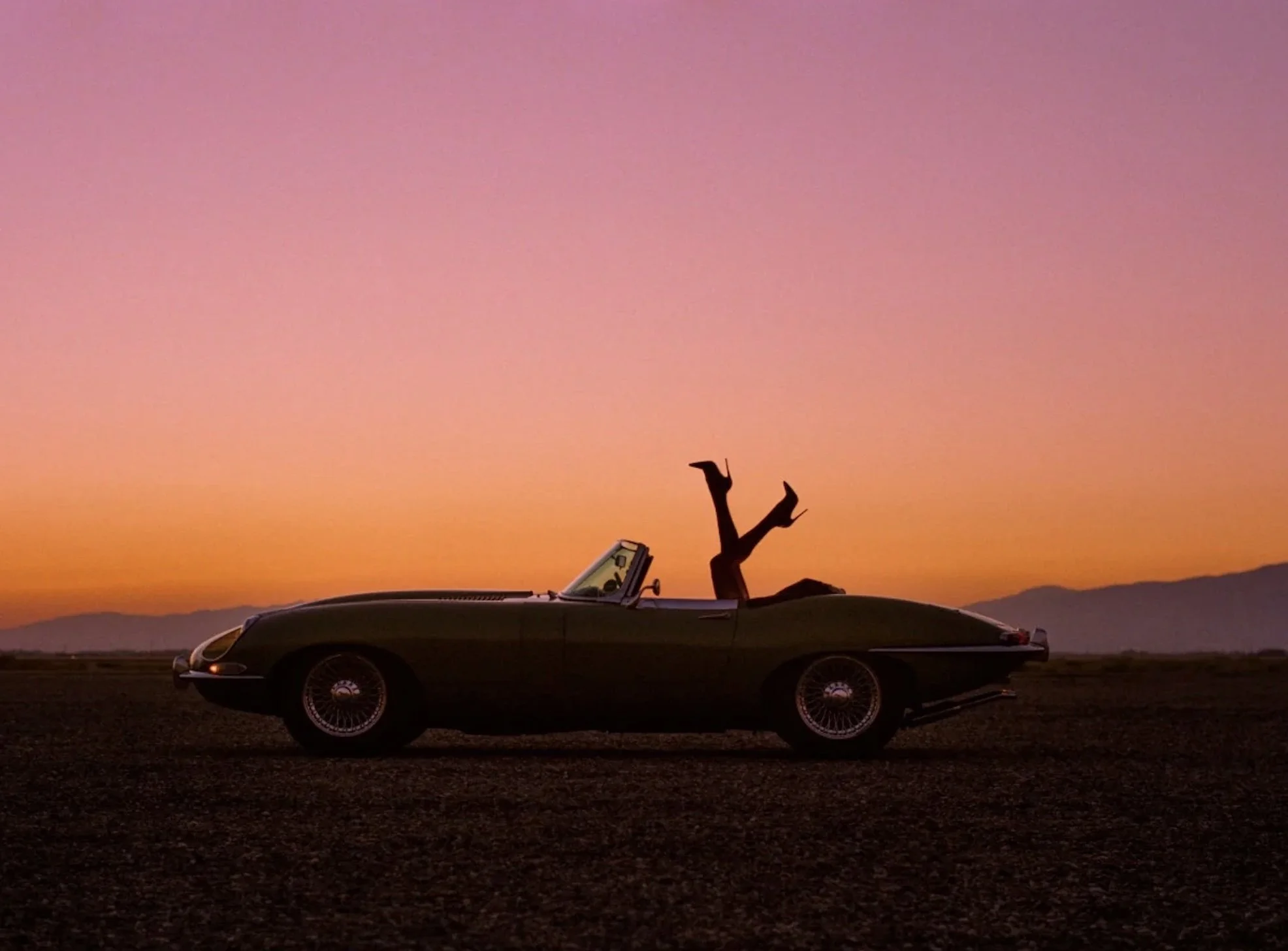
Desert Legs by Tyler Shields | Inquire
At the same time, photographers like Jeffrey Czum approach cinematic storytelling through quieter forms of world-building. His photographs often transform mundane American landscapes into surreal or imagined realities, neon signs emerge unexpectedly, roadside architecture takes on fictional identities, and otherwise ordinary scenes begin to feel suspended somewhere between memory and film. Rather than relying on overt spectacle, Czum’s work creates tension through atmosphere and suggestion, evoking the sensation of a paused scene waiting to continue beyond the frame.
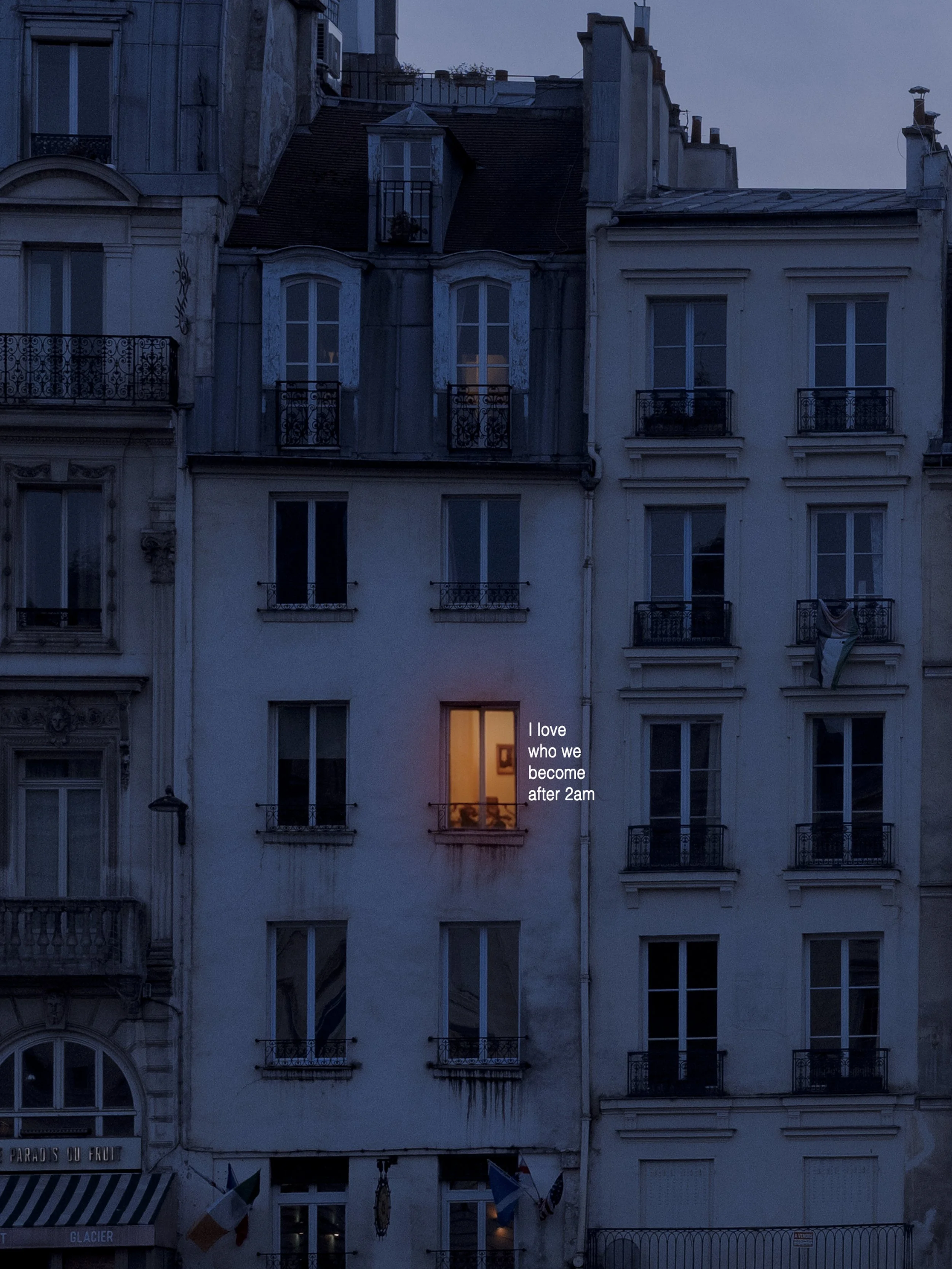
2 AM by Jeffrey Czum | Inquire
Part of the renewed fascination with cinematic photography may stem from a broader cultural fatigue surrounding immediacy. As viewers become increasingly inundated with disposable content, photographs that invite slower looking and emotional projection stand apart. Cinematic images resist instant consumption. They reward attention.
This shift also reflects a growing desire for narrative within contemporary collecting. Collectors are not simply responding to technical execution or aesthetics alone, but to photographs capable of creating atmosphere within a space. Much like cinema itself, these works operate emotionally. They evoke curiosity, nostalgia, suspense, glamour, or unease without fully explaining themselves.
In many ways, the return of cinematic photography signals a return to storytelling itself. At a time when images are produced and consumed faster than ever before, photographers who create worlds rather than simply document them continue to resonate most deeply.